
Tick Weaponization to be Investigated
A new law requires a review of military archives to determine whether Cold War tick weaponization contributed to today’s epidemic of tick-borne diseases.

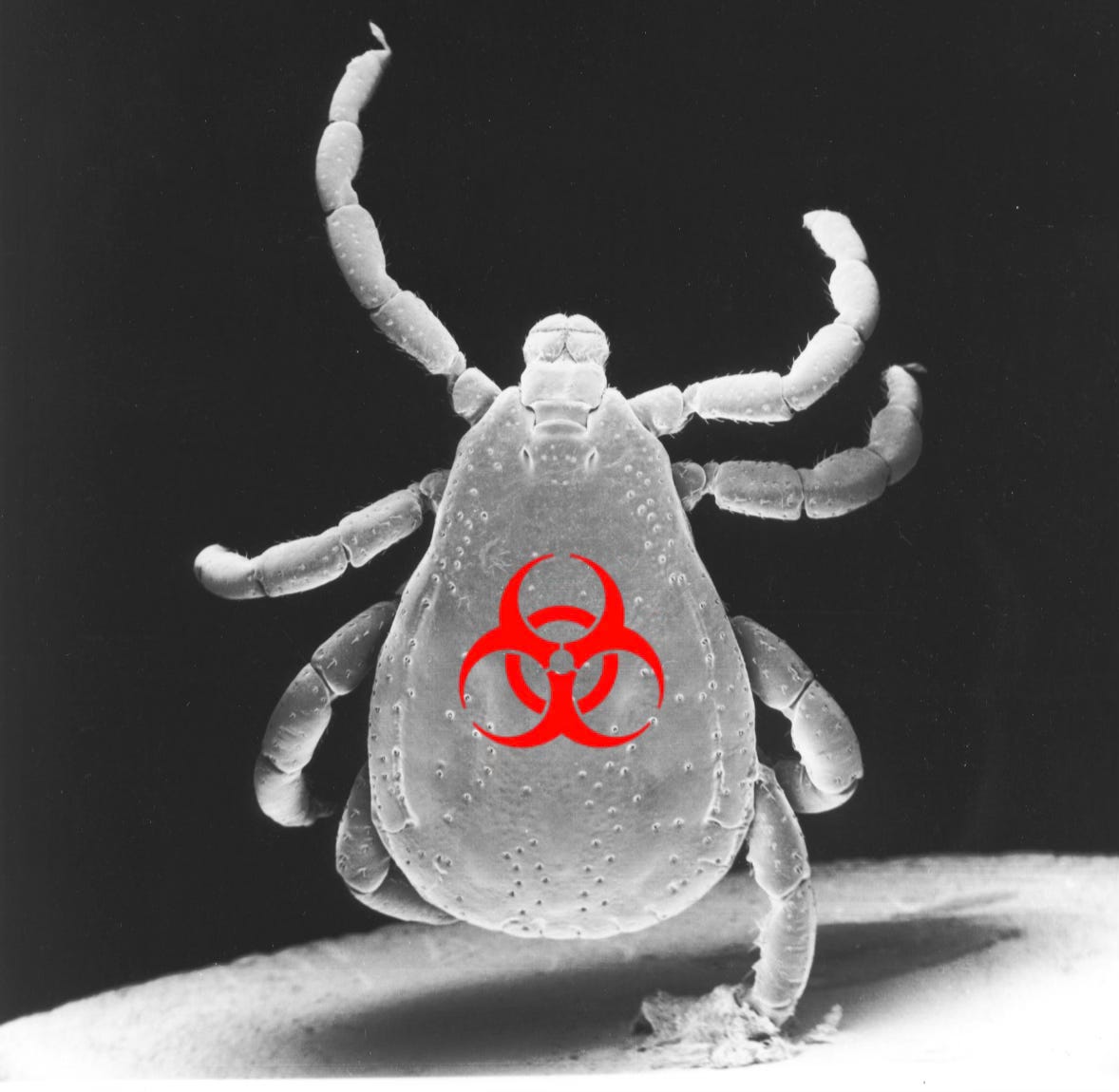
On December 18, the President signed into law an order to “review and report on biological weapons experiments on and in relation to ticks [and] tick-borne diseases.” This amendment, part of the National Defense Authorization Act for Fiscal Year 2026, was authored by Rep. Chris Smith (R-NJ). [Full text below.]
The investigation will look for documents and reports that discuss:
The use of ticks as delivery mechanisms for biological warfare agents.
Experiments seeking to enhance the virulence of tick-borne diseases, including the use of ticks as living incubators for combining bacterial and viral agents.
Any efforts to improve the effectiveness and viability of tick-borne Spirochaetales or Rickettsiales bacteria as biological weapons by combining them with other bacteria or viruses. (Spirochaetales include the bacteria that cause diseases such as syphilis, Lyme disease, leptospirosis, and relapsing fever. Rickettsiales include the bacteria that cause anaplasmosis, ehrlichiosis, and Rocky Mountain spotted fever.)
Locations of tick research and experiments both inside and outside of the U.S., and whether ticks were released intentionally or unintentionally during these activities.
Inquiries into whether records related to this bioweapons research were destroyed, either intentionally or unintentionally.

Why this investigation is important
Releases of genetically modified, weaponized organisms can have long-lasting effects on the environment and human/animal health. Identifying where engineered organisms may have escaped into the environment could save lives and reduce long-term research and healthcare costs. If these microbes have been genetically altered, we need a more intelligent approach to disease control and treatment. If the military harmed U.S. citizens through irresponsible experiments, the government has an obligation to acknowledge and remedy those harms. And if the original Lyme-area outbreak resulted from a hostile foreign act, future biosecurity protections must be strengthened. Determining the root cause of an epidemic directly informs treatment strategies, surveillance priorities, containment efforts, and biosecurity reforms essential to preventing future outbreaks.
Ticks—and the diseases they transmit—pose a growing threat to Americans, the military, and agriculture. Record numbers of tick bites have been reported in New York (2024), Maine (2024), and Wisconsin (2023). The CDC estimates approximately 500,000 new cases of Lyme disease annually, and about one-third of patients do not respond to recommended treatment protocols.
There have been no major NIH-funded treatment trials for chronic Lyme disease in more than two decades, and current screening tests remain unreliable. This problem will not resolve itself unless mainstream medicine adopts a broader, more integrated understanding of tick-borne illness. The issue is not just what we label “Lyme disease,” but what else ticks may be carrying.
What we know about tick weaponization program today
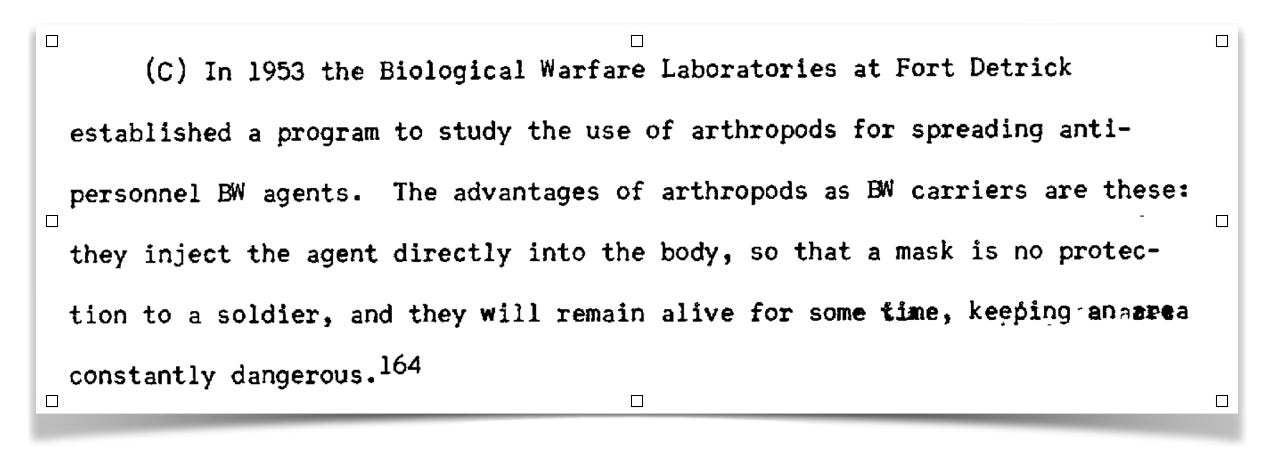
My book BITTEN presents extensive evidence that Willy Burgdorfer, the discoverer of the Lyme disease bacterium, artificially infected fleas, ticks, and mosquitoes with pathogenic organisms as part of the U.S. biological weapons program. The stated military intent was to deploy these vectors against enemy populations.
The new findings disclosed in BITTEN include:
A CIA pilot operation in which infected ticks were reportedly dropped on Cuban sugarcane workers, as part of Operation Mongoose, which included an effort to undermine Fidel Castro’s primary cash crop.
Army-funded, uncontrolled releases of radioactive and aggressive Lone Star ticks along the U.S. Atlantic bird flyway. (Unlike deer ticks, Lone Star ticks can transmit spotted fever and trigger alpha-gal red-meat allergy.)
A suspected cover-up involving a potentially weaponized organism known as “the Swiss Agent” in the Lyme, Connecticut–Long Island region. During the Lyme disease investigation, Burgdorfer was instructed to omit reference to this organism from his Science magazine discovery paper.
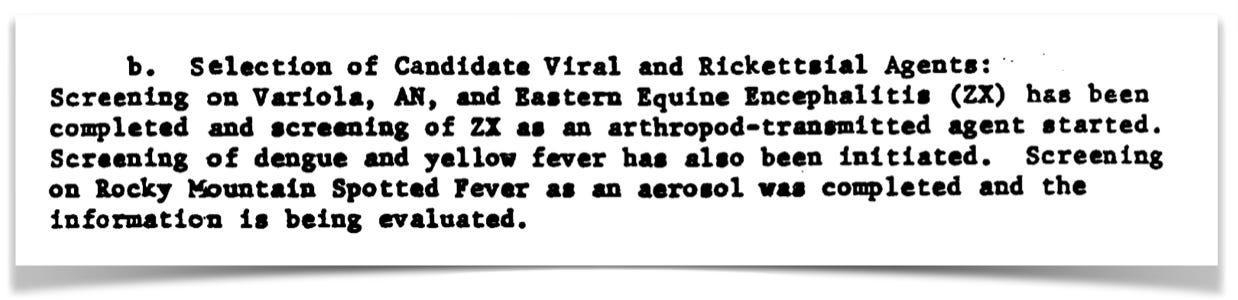
A strategic shift in the 1960s away from insect-borne weapons toward large-scale production of biological agents, brewed by the ton in stainless-steel tanks, dried, milled, and dispersed via planes, boats, and vehicles. Some pilot tests were conducted on unsuspecting U.S. populations. Notably, several preferred military agents—including tularemia and spotted fever—are transmissible by ticks.
These findings might have been buried with Willy Burgdorfer had it not been for my research and Rep. Smith’s six-year effort to force declassification. Last week, a media release from the Congressman’s office stated:
“Smith’s amendments have been inspired in-part by the explosion of Lyme disease in New Jersey and Kris Newby’s book, Bitten: The Secret History of Lyme Disease and Biological Weapons. The book includes in-depth interviews with and the personal files of Dr. Willy Burgdorfer—the federal researcher and U.S. bioweapons specialist credited with discovering Lyme disease—who later revealed that he and other bioweapons specialists injected ticks with pathogens, in order to cause severe disability, disease, and even death to potential enemies in unsuspecting ways.”
The amendment and evidence presented in BITTEN was also supported by Robert F. Kennedy Jr., Secretary of the U.S. Department of Health and Human Services (HHS); Jay Bhattacharya, MD, PhD, Director of the National Institutes of Health (NIH); and Marty Makary, MD, MPH, Commissioner of the U.S. Food and Drug Administration (FDA).
Still, significant work remains. Over time, the scope of the amendment was narrowed from all insect-borne weapons to tick-related bioweapons only, leaving unresolved allegations of bug-borne weapons use in Korea and Vietnam. In addition, the military retains broad discretion to redact documents under “risk-management” rationales, citing concerns about reuse, reinterpretation, or recombination of biological knowledge that could enable harm today.
My historical perspective
I believe history will judge the tick-borne disease outbreak that began in 1968 as one of the gravest public-health failures of the last century. Early on, public-health authorities failed to recognize the simultaneous emergence of three unusually virulent pathogens—Lyme disease, babesiosis, and spotted fever.
This outbreak, now global and accelerating, might have been contained through early tick-control measures and a sustained public-education campaign. Instead, secrecy surrounding the biological weapons program obstructed timely investigation and response, costing countless lives.
More than fifty years later, addressing this crisis will require an extraordinary, coordinated effort. Climate change is enabling disease-carrying ticks to expand into new regions. The medical system remains reluctant to diagnose and treat Lyme disease and co-infections aggressively. And chronic underfunding continues to plague tick-borne disease research.
If this outbreak resulted from a U.S. accident, the truth must be exposed.
###
Kris Newby is an award-winning medical science writer and the senior producer of the Lyme disease documentary UNDER OUR SKIN. Her book BITTEN: The Secret History of Lyme Disease and Biological Weapons won three international book awards for journalism and narrative nonfiction. Previously, Newby worked for Stanford Medical School, Apple, and other Silicon Valley companies.
If you’ve found this content interesting, please consider supporting it through a small paid subscription or donation. While you can read my posts for free, a paid subscription helps underwrite this independent research. And it keeps it free for those who can’t afford to pay.
###
S.1071 - National Defense Authorization Act for Fiscal Year 2026
SEC. 1068. GAO REVIEW AND REPORT ON BIOLOGICAL WEAPONS EXPERIMENTS ON
AND IN RELATION TO TICKS, TICK-BORNE DISEASE.
(a) Review.--The Comptroller General of the United States shall, to
the extent practicable, conduct a review of research conducted during
the period beginning on January 1, 1945, and ending on December 31,
1972, by the Department of Defense, including by the Department of
Defense in consultation with the National Institutes of Health, the
Department of Agriculture, or any other Federal department or agency
on--
(1) the use of ticks as hosts or delivery mechanisms for
biological warfare agents, including experiments involving
Spirochaetales or Rickettsiales; and
(2) any efforts to improve the effectiveness and viability of
Spirochaetales or Rickettsiales as biological weapons through
combination with other diseases or viruses.
(b) Location of Research.--In conducting the review under
subsection (a), the Comptroller General shall review research conducted
at facilities located inside the United States and, if feasible,
facilities located outside the United States, including laboratories
and field work locations.
(c) Information to Be Reviewed.--
(1) Classified information.--In conducting the review under
subsection (a), the Comptroller General shall review any relevant
classified information.
(2) Matters for review.--In conducting the review under
subsection (a), the Comptroller General shall review, among other
sources, the following:
(A) Technical Reports related to The Summary of Major
Events and Problems, US Army Chemical Corps, FY 1951 - FY1969.
(B) Site Holding: CB DT DW 48158 Title: Virus and
Rickettsia Waste Disposal Study. Technical Report No. 103,
January 1969. Corp Author Name: FORT DETRICK FREDERICK MD
Report Number: SMUFD-TR-103 Publish Date: 19690101.
(C) Site Holding: CB DT DW 60538 Title: A Plaque Assay
System for Several Species of Rickettsia. Corp Author Name:
FORT DETRICK FREDERICK MD Report Number: SMUFD-TM-538 Publish
Date: 19690601.
(D) Site Holding: CB DW 531493 Title: Progress Report for
Ecology and Epidemiology and Biological Field Test Technology,
Third Quarter FY 1967. Corp Author Name: ARMY DUGWAY PROVING
GROUND UT Publish Date: 19670508.
(E) Any relevant scientific research on the history of Lyme
disease in the United States.
(d) Report.--
(1) In general.--Not later than two years after the date of the
enactment of this Act, the Comptroller General shall submit to the
Committees on Armed Services of the House of Representatives or the
Senate a report that includes the following:
(A) A list of the research projects reviewed under
subsection (a) and an assessment of the scope of such research.
(B) A finding by the Comptroller General as to whether such
review could lead to a determination that any ticks used in
such research were released outside of any facility (including
any ticks that were released unintentionally).
(C) A finding by the Comptroller General as to whether such
review could lead to a determination that any records related
to such research were destroyed, and whether such destruction
was intentional or unintentional.
(2) Form of report.--The report required under paragraph (1)
shall be submitted in unclassified form, but may contain a
classified annex.
Lab 257 was the first book to present evidence of the possibility of a lab leak. I think the jury is still out on how/where Lyme, Babesia, and spotted fever got out. There are a number of research labs in the area where the outbreaks started, including the Yale Arbovirus Unit (YARU), Plum Island, Pfizer, and the Groton submarine base. We'll see. You can see an animation of the spread by scrolling to the bottom of this webpage: https://www.krisnewby.com/images
Hi Kris -- Thank you for reporting on this. Lyme disease is the great imitator and unlike most other diseases affects nearly every part of the body. This can't come from nature. It had to have been engineered to not only be hard to diagnose but nearly impossible in many cases to treat effectively.
I grew up on Long Island twenty minutes from The Plum Island Animal Disease Research Center. No one can tell me that wasn't a factor in the preponderance of cases on the East End of Long Island and the surrounding area. Everyone I knew had Lyme disease.
Lab 257 and your book should be required reading for anyone affected by Lyme.